HISTORY
OF SMOLENSK AIRCRAFT PLANT
CHRONOLOGY OF NAMES OF SMOLENSK AIRCRAFT PLANT
1926-28
|
aircraft repair plant #3 |
1928-41
|
plant #35 of the USSR |
1941-44
|
integrated into the plant #1 in the city of Kuibyshev |
1944-66
|
plant #475 of the NKAP (MAP) of the USSR* |
1967-74
|
Smolensk engineering plant of the MAP of the USSR |
1974-93
|
Smolensk aircraft plant of the MAP of the USSR |
since 93
|
Smolensk aircraft plant JSC |
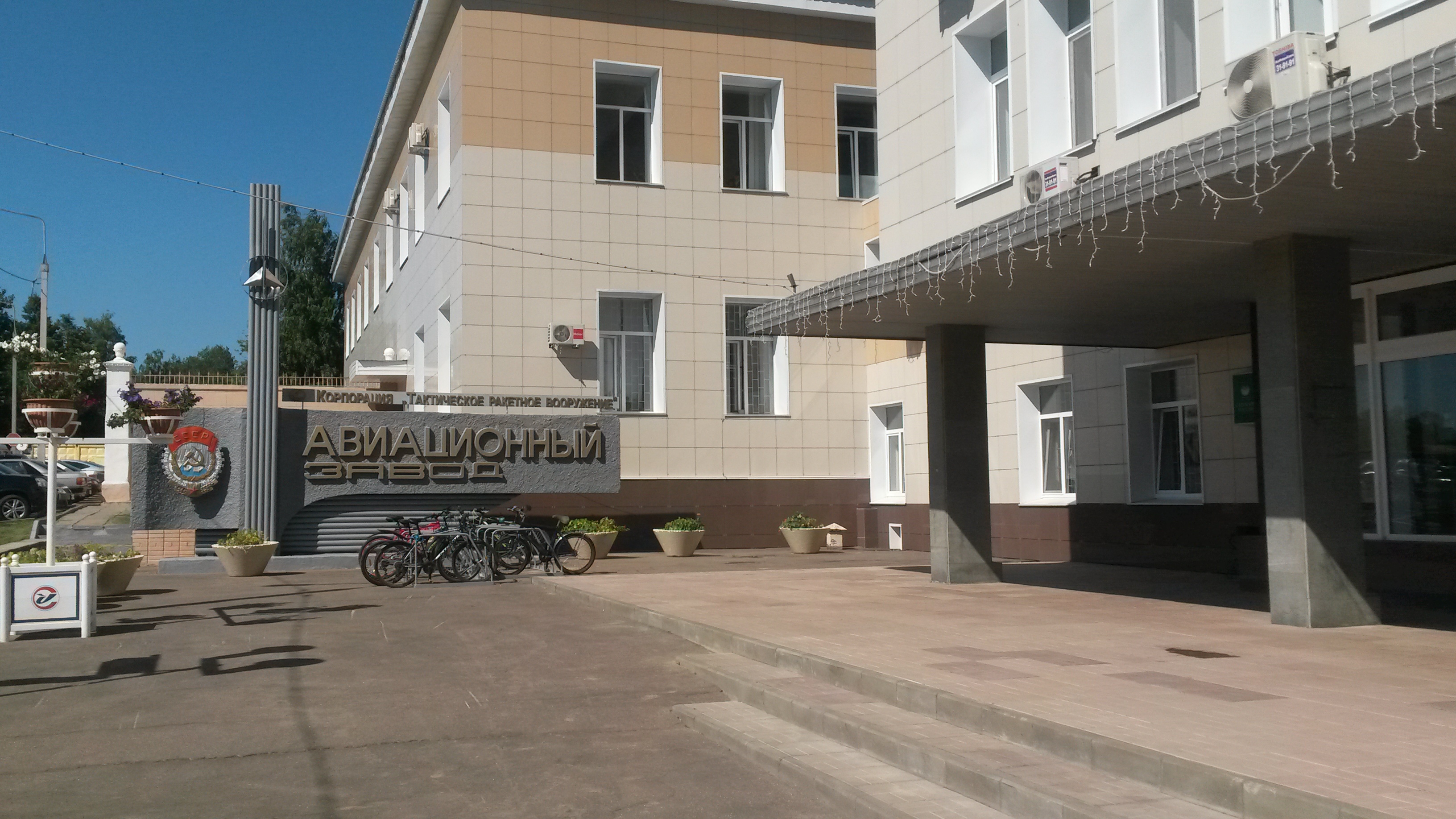
The aircraft plant in Smolensk is the brainchild of M.N. Tukhachevsky. Commander-in-Chief of the Western front troops, he sent the Executive committee of the province a letter dated 12.04.23 requesting assistance in equipping the Smolensk airfield as soon as possible and to allot premises to Remvozdukhmasterskye #2 to develop into an aircraft plant. In 1924-25 the administration of Promvozdukh drafted a project to construct an aircraft repair plant in Smolensk. The construction began in the late 1925 under the supervision of A.D. Muratov. Within 1925-26 most urgently needed workshops were built, including mechanic shop, wood shop, upholstering shop, finishing plant, engine shop, assembly shop, power station and drying room. The first manager became M.V. Bavtuto.
In November 1926 the Smolensk aircraft repair plant #3 was inaugurated. The same year the first lot of aircraft and engines underwent repair and was commissioned. At the meeting of the cell of the C.P.S.U. (B.) in July 1927 the Head of Promvozdukh said, "The quality of repair of aircraft and engines is satisfactory and even surpasses that of old aircraft plants." Gradually the plant turns from single repair orders to serial repair activity. New workshops are constructed to repair the aircraft R-1, I-2, I-3, R-5, R-6, TB-1, the engines Ì-5, Ì-11, Ì-17 and Ì-34.
On May 28, 1943 pursuant to order #28/182 of Narkomtyazhprom** concerning the Central Aviation Administration the Bureau of Special Constructions (BOK) specializing in development of aerial vehicles for stratospheric and super long-distance flights was transferred from the plant #39 named after Menzhinsky to the plant #35. V.A. Chizhevsky was appointed Chief Designer of the plant #35.
The first mission of the Bureau of Special Constructions was to retrofit the basket of the stratosphere balloon USSR-1 for the use on the balloon USSR-1bis which took off on June 26, 1935. Further developments included design and production of the first stratoplane BOK -1 with the pressurized cabin, the flying wing BOK-5, experimental high-altitude airplane BOK-7, the record-breaker BOK-15 for the around-the-world flight, the baskets for the stratosphere balloons USSR-2 and USSR-3.
Outstanding pilots visited the plant to see and test the experimental aircraft: V.P. Chkalov, M.M. Gromov, A.B. Yumashev, P.D. Osipenko, G. F. Baidukov, P.M. Stefanovsky, S.A. Danilin, I. T. Spirin, A.V. Belyakov.
In February 1938 the BOK was relocated from Smolensk to Podlipki nearby Moscow and integrated into the design bureau KB-29.
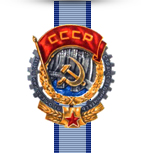
In winter 1937/38 the plant was challenged with the task to manufacture several lightweight production R-5s to rescue the team of I.D. Papanin from drifting ice. M.A. Yeliseev, the assembly mechanic who participated in the expedition on the ice-breaker "Taimyr" and was in charge of the operation of R-5s, suited for arctic flights, was awarded the Order of the Red Banner of Labour in April 1938 and became the first order-bearer among the aircraft builders in Smolensk.
In 1938-39 the plant mastered the repair of the aircraft SB, I-15, I-16 and the engines M-100, M-25. In 1939-41the plant was actively involved into the production preparation process which would have resulted in a large-scale lot production of the most advanced aircraft then, namely Il-2. However, with the outbreak of the Great Patriotic War these plans were disrupted. The front swiftly approached Smolensk and the plant was evacuated. As early as July 7, 1941 the first group of evacuated specialists was taken on the staff of the plant #122 under construction in Kuibyshev. Smolensk citizens constituted 90% of the qualified labour force at the new enterprise. The equipment and accessories completely transferred from the plant #35 enabled the personnel to kick off production of combat airplanes right under the sky. In October 1941 the staffs of the plants #35 and #122 made part of the plant #1 evacuated from Moscow (currently plant "Progress" in Samara, Russia).
Over 500 workers of the plant got enrolled in the Army, many of them served in field aircraft maintenance crews, some were on missions in the enemy's rear.
On September 25, 1943 the Soviet Army liberated Smolensk. The plant had been destroyed down to the foundation: the 23 large production buildings were gone altogether, the general damage amounted to 46 million rubles. Under the initiative of M.A. Filatov, director, on February 3, 1944 the GKO (State Defense Committee) issued an ordinance while on March 10, 1944 the NKAP issued order #181 to use the former aircraft plant #35 in Smolensk as the base for construction of a plant for repair and overhaul of aircraft and engines. As early as spring of 1944 the capability was introduced for outside repair and overhaul of Il-2, La-5, Yak-7, La-7. The reconditioned aircraft flew away right to the front.
In 1946-47 the plant mastered the repair and overhaul of Yak-3, Yak-9, Yak-11 (during the three postwar years the plant repaired about 400 aircraft), performed conversion of Po-2s into aircraft for agricultural application.
After the war was over the repair and overhaul of aircraft and engines were gradually reducing to come to a complete standstill in 1949. The plant started to manufacture aircraft ground equipment, including step-ladder, aircraft shoes, hoists, fuel heating systems, pilot's seatbelts, corner reflectors, skies and spare parts for Po-2.
The plant produced launcher carts for starting jet engines (between 1950 and 1965 over 6,000 sets were supplied), special ZIS-150-based bodies for the searchlight plants LUCH-1 (in 1950 the plant produced 60 sets), outfit for inspection of aircraft hydraulics, bomb carts. the qualified workers and specialists returning from the evacuation, reconstruction of demolished shops and fitting out of the plant - all added up to ensure the capability to complete the task of manufacturing airframes of A-2 (between 1949 and 1951 over 200 airframes were produced) and VA-3/48, target glider PM designed by G.I. Bakshaev.
Pursuant to order of MAP #352 dated 03.06.54 the plant was given a new responsible task that set up its profile for the future. In the years that followed the personnel of the plant mastered the fabrication of products developed by the design bureaus named after A.I. Mikoyan, V.N. Chelomey, C.V. Ilyushin, A.S. Yakovlev, A.Y. Bereznyak, S.A. Lavochkin.
In 1954 new shops were introduced, namely: loft and mould shop, building berth shop, assembling shop, blanking shop.
In 1956 the production output reached the pre-war level.
In 1960 a specialized electrical manufacturing department was set up to produce automatic plants and ground complexes, power-supply and automatic control systems, calculators.
In 1966-68 the plant produced amphibian snowplanes for the northern regions of the USSR, developed by the design bureau named after A.N. Tupolev, which were also exported (to Finland).
Since 1967 the plant has been manufacturing souvenir products (breastplates, jubilee medals, etc.). In some years the production output exceeded 1 million pieces.
In 1971 Smolensk aircraft plant was awarded the Order of the Labour Red Banner for commissioning production of new technical equipment and overfulfilment of the objectives of the eighth five-year plan.
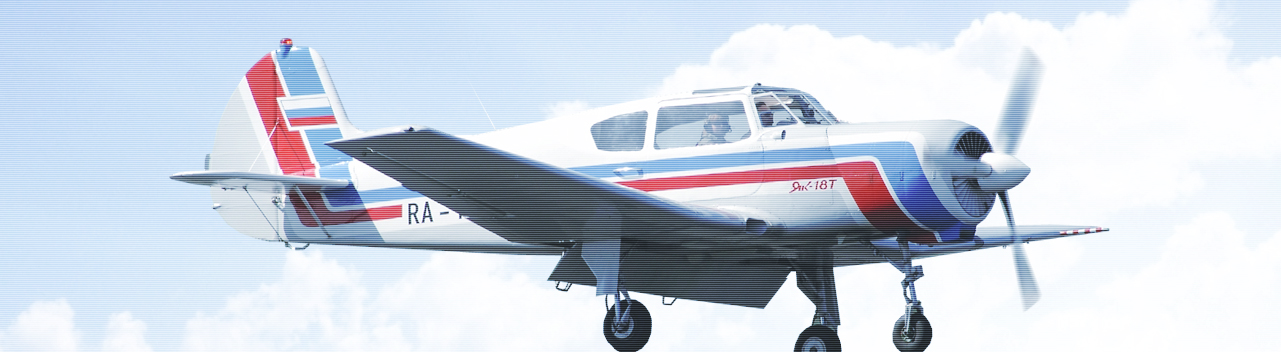
In 1972 the plant prepared in undertime and launched production of the aircraft Yak-18 which made its first flight in May 1973. Before 1983 the plant produced over 500 aircraft that were in service in all civil aviation flight schools in the USSR.
In 1973-74 the plant manufactured the development batch of wings for the sporting aircraft Yak-50.
In 1975 to the occasion of the XXVth Convention of the Communist Party of the Soviet Union the personnel of the plant manufactured the set of the swept wing, empennage and pods for Yak-42 ahead of the schedule. The first preseries aircraft took off from the airfield of Smolensk aircraft plant on October 26, 1976.
In 1980 the plant launched production of the wing, empennage and fuselage assembly units for the space shuttle "Buran".
Till 1982 the plant had produced both complete Yak-42s and wing panel sets following the established cooperation practice with Saratov aircraft plant. Then Smolensk plant specialized only in production of wing panels and air duct of the centre engine for Yak-42.
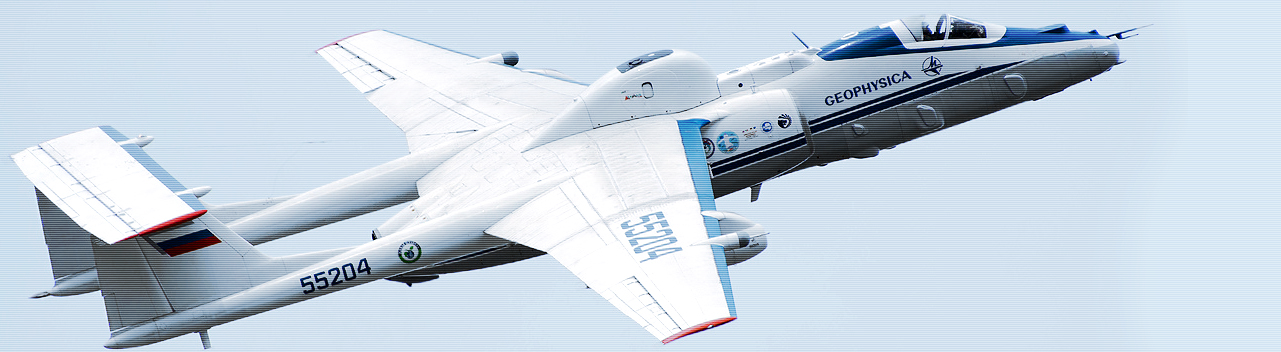
In 1984 manufacturing facilities were put in preparation for production of the high-altitude aircraft M-55 "Geofizika" designed by Myasishchev Experimental Machine Building Plant. The aircraft performed its first flight on August 8, 1988.
In 1992 the plant started to equip Yak-40 to Yak-40D with enlarged fuel tanks to load 6 additional tonnes of fuel.
Under the conversion program fabrication of automated laying-up machines "Kometa" and inspection measuring machines MK-001RS for the light and textile industries was launched.
In 1993 the plant resumed production of Yak-18 to export and manufactured a development lot of light-engine aircraft Yak-112 designed by Design bureau named after A.S. Yakovlev.
On December 28, 1993, in Smolensk the light multi-role aircraft SM-92 "Finist" designed under the supervision of V.P. Kondratyev performed its first flight. The plant launched its lot production
In 1995 the plant manufactured an experimental SM-94-1, upgraded Yak-18T.
The plant participated in the production of the first development aircraft Yak-130 that took off on April 4, 1996.
Beginning with 1996 the plant has been upgrading Yak-40s to the executive variant including installation of avionics for operation on international airlines, conversion of the cabin to the business-class and addition of external polyurethane finishing.
In 2000 the plant jointly with Sukhoi Design Bureau developed the agricultural aircraft Su-38. The extensive experience in the construction of light aircraft enabled the engineers of the plant to work over the documentation of the leading DB and at the same time to suggest valuable solutions to improve the aircraft design and enhance its performance.
In 2000 the fabrication of mass consumption products was resumed.
2002: participation in Yak-130 and Tu-154M projects (manufacture of wingtips).
2003: MAKS-2003 - presentation of a family of new aircraft: SM-2000, SM-2000P, SP-55M, SM-92, SM-92T, constructed according to the design of V.P. Kondratyev.
In the summer of 2004 tests of the six-seat hydroplane SM-92 began. The amphibian-type flotation landing gear ensures landing on unpaved airfields and unprepared sites.
* The abbreviation "NKAP" stands for the People's Commissariat of Aircraft Industry and "MAP", NKAP's successor, Ministry of Aircraft Industry.
** The abbreviation "Narkomtyazhprom" stands for the People's Commissar of Heavy Industry which is equivalent to the post of a minister today.
|